Los Angeles T-Bone Accident Claim Guide
A T-bone (side-impact) crash at a Los Angeles intersection often produces serious injuries and a disputed fault story. Insurers frequently argue shared blame even when right-of-way rules point the other way. This guide explains how California personal injury claims handle intersection liability, what evidence matters (signal timing, surveillance, impact angle), and what to document before you accept an offer. For statewide valuation factors, see how T-bone accident claims are valued in California.
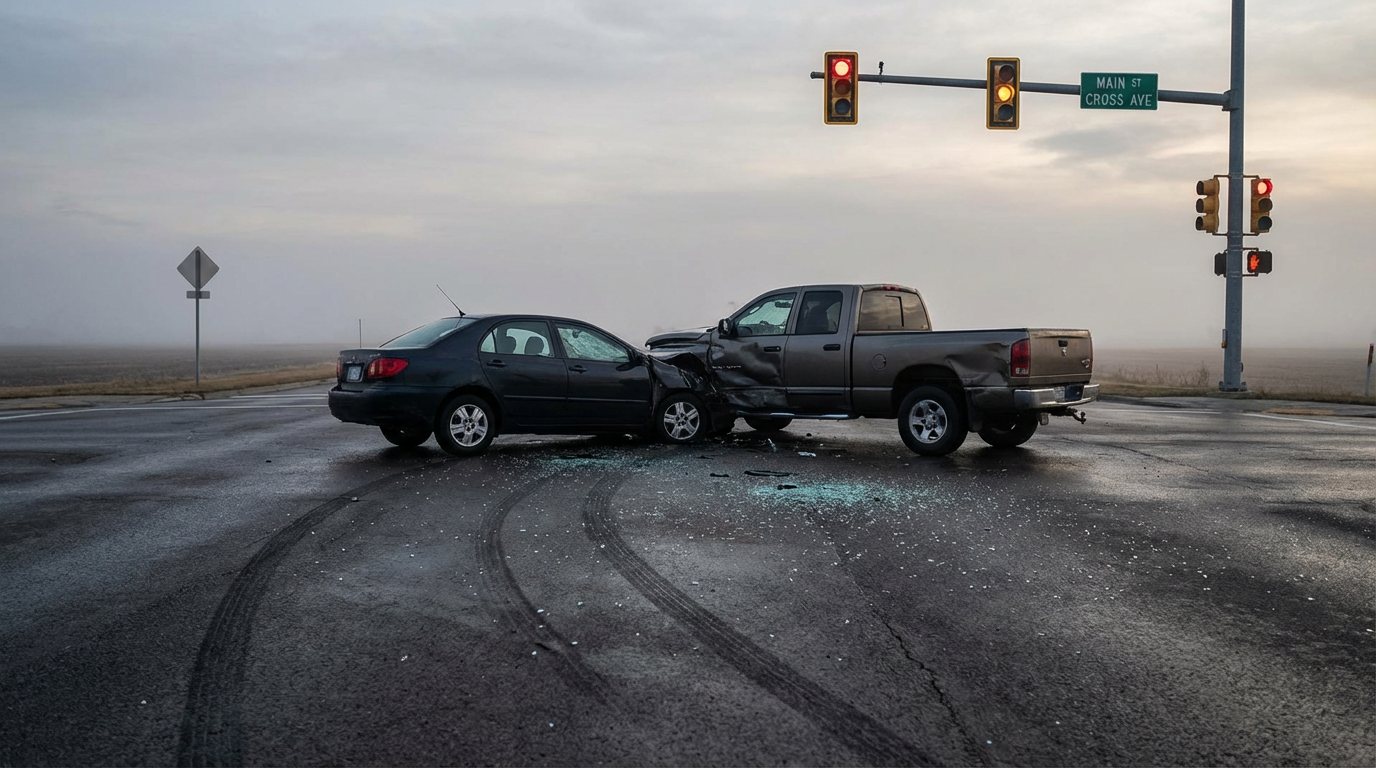
Side-impact claims turn on evidence sequencing: signal phase timing, lane geometry, impact angle, and injury mechanism documented early — before the first valuation discussion with the carrier. A free claim review can help you understand liability and coverage before you sign anything.
Case Visual Guide: Intersection Liability Blueprint
Infographic concept: A four-panel intersection reconstruction: right-of-way law, signal sequence, vehicle paths, and intrusion-zone injury mapping. Add a side column showing insurer blame-shifting arguments and evidence rebuttals.
Alt text: "Los Angeles T-bone accident evidence map with signal timing, right-of-way analysis, and side-impact injury zones."
Mobile note: publish a full-size vertical version for clear readability of signal and timing details.
Key Takeaways
- T-bone liability usually turns on right-of-way proof, not assumptions.
- Intersection surveillance and timing data can decide fault allocation.
- Vehicle intrusion often supports severe injury causation arguments.
- Comparative fault claims are common insurer tactics in side-impact files.
- Early evidence preservation materially affects settlement leverage.
Liability and Legal Framework
California Right-of-Way and Comparative Fault
Most t bone accident lawyer los angeles files begin with right-of-way analysis, then shift into comparative fault arguments. California pure comparative negligence permits recovery even when fault is shared, but every assigned percentage reduces value. Defense carriers often allege late yellow entry, unsafe turn execution, or speed contribution to drive down settlement authority.
Burden of Proof in Intersection Crashes
A strong intersection accident lawyer los angeles case must prove sequence: who had lawful movement rights, where each vehicle was at entry, and whether evasive opportunities existed. Jury-facing clarity matters at pre-litigation stage because adjusters evaluate trial risk before they increase reserves.
Evidence Preservation Priorities
Signal timing logs, business camera footage, and witness memory degrade quickly. We secure footage requests early, collect scene geometry, and document impact points before repairs erase structural evidence. In side impact crash injury claim files, vehicle intrusion photos are especially important for causation disputes.
Insurance Blame-Shifting Tactics
Common tactics include "both drivers entered on yellow," "line-of-sight obstruction," and "avoidable impact." We counter with traffic engineering context, map-based path analysis, and medical-mechanism correlation. A disciplined proof package prevents lowball fault splits from becoming the default valuation baseline.
What Builds a Strong T-Bone Case
- Collision report plus supplemental witness statements
- Intersection photos, lane markings, and signal placement
- Surveillance retrieval requests and timing capture
- Vehicle crush and intrusion documentation
- Prompt medical records linking injury to side-force mechanics
- Wage loss and functional limitation support
For scenario pages, surveillance and intersection condition records are essential. Parking-lot style assumptions do not apply. Side-impact claims require specific movement reconstruction and collision-energy logic.
FAQs
Who is usually at fault in a T-bone crash?
Usually the driver who failed right-of-way, but insurers often dispute timing and movement legality. Evidence decides.
Can I still recover if I share fault?
Yes, under California comparative negligence, but recovery is reduced by your fault percentage.
Why do insurers fight side-impact claims hard?
Exposure is often high due to serious injury patterns, so liability and causation are frequently contested.
What makes a strong intersection claim?
Signal evidence, witness consistency, impact mapping, and coherent medical causation records.
How fast should I act after an intersection crash?
Immediately. Camera and scene evidence can disappear quickly.
If a Commercial Truck Was Involved
This page covers passenger-vehicle T-bone (side-impact) collisions in Los Angeles. When the striking vehicle is a commercial truck — a semi, box truck, delivery truck, or other large commercial vehicle — additional issues come into play (federal motor-carrier rules, employer/contractor liability, electronic control module data, hours-of-service logs, and larger insurance layers). If your side-impact crash involved a commercial truck, see the California truck accident claim guide and the related pages on truck accident evidence and truck accident liability in addition to this page.
Related Resources
Primary Resource: California personal injury claim guide
T-Bone Claim Value: How T-bone accident claims are valued in California
If a Truck Was Involved: California truck accident claim guide
Related Topics: Auto accidents (CA) | Rear-end accidents (LA) | Comparative negligence (CA)
Claim Playbooks: Insurance Company Playbook | Demand Letter Negotiation | Settlement Checklist
Strong CTA
Intersection evidence does not preserve itself. If you were struck in a side-impact crash, fast legal action can protect both liability position and settlement range. Request a free claim review for case review and immediate evidence strategy.
Results Disclaimer: Prior verdicts and settlements do not guarantee similar outcomes.
Attorney Advertising: This page may be considered attorney advertising.
No Attorney-Client Relationship: No attorney-client relationship is created without a signed written agreement.