Pressure Ulcers From Nursing Home Neglect
Pressure ulcers (bed sores, or bedsores in nursing homes) are a common and serious sign of nursing home neglect. This page explains what they are, how they develop, why they indicate neglect, and the medical and legal implications for families in Los Angeles.
What Are Pressure Ulcers?
Pressure ulcers are injuries to the skin and underlying tissue caused by prolonged pressure on the skin. They often develop over bony areas—heels, tailbone, hips, shoulder blades—in people who cannot reposition themselves. In nursing homes, residents who are bedbound or in wheelchairs are at high risk when staff fail to turn them or use proper support surfaces.
How Pressure Ulcers Develop
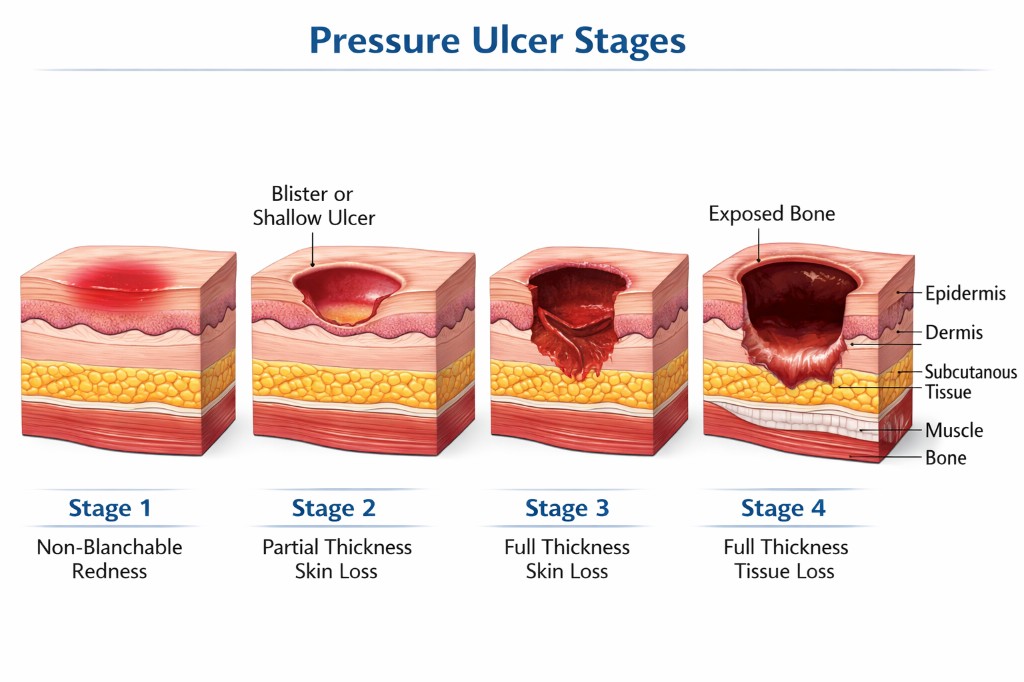
When pressure cuts off blood flow to an area, the tissue begins to break down. Friction, moisture, and poor nutrition can speed the process. Early signs include persistent redness (Stage 1) that does not blanch when pressed. Without intervention, the damage can progress to partial-thickness skin loss (Stage 2), then full-thickness loss into fat (Stage 3), and in the worst cases down to muscle or bone (Stage 4).
Why Pressure Ulcers Indicate Neglect
Most pressure ulcers are preventable with proper care: regular repositioning (at least every 2 hours for at-risk residents), support surfaces, skin checks, and adequate nutrition and hydration. When a facility allows ulcers to form or progress to Stage 3 or Stage 4, it often indicates understaffing, poor training, or failure to follow care plans. In legal terms, that can support a claim for nursing home negligence.
Medical Treatment
Treatment depends on the stage. Early stages may require off-loading pressure, dressings, and skin care. Advanced stages often need wound care specialists, debridement, antibiotics for infection, and sometimes surgery or hospitalization. Sepsis and death are possible when ulcers are left untreated.
Legal Liability
Nursing homes owe residents a duty to provide adequate care. When they fail to prevent or properly treat pressure ulcers, they may be liable for the resident’s injuries, pain, medical costs, and in wrongful death cases, damages for the family. A pressure ulcer attorney or nursing home neglect lawyer can review records, establish the standard of care, and pursue compensation.
California facilities are subject to state and federal standards; violations and poor wound documentation often support a neglect claim. If your loved one developed Stage 3 or Stage 4 pressure ulcers in an LA-area nursing home or assisted living facility, or you see signs of neglect, contact a lawyer for a free case review. Early review of the chart and wound notes can help preserve evidence.